Saturday, April 27, 2013

Transition Into Nowhere


Being in the same place two years later...Sucks.

The elation of Tuesday’s noon was soon swallowed by the hollow emptiness of Wednesday’s realization.

The final push through exams was over. The sleep deprivation, caffeine cocktail could finally be put aside. The future opened itself before me, a future I could not see two hours previous because of the looming task of exam writing that consumed the entirety of my being. Sweet, sweet relief. My shoulders dropped two-inches that day.

Experiencing relief, I joined some friends to experience the great outdoors. Rock climbing followed by two days of skiing. It was to be a great vacation before the summer. A time to unwind, to enjoy completing the semester, and to celebrate. I made it until 10 am on Wednesday morning, then the panic began to set in.

“What am I doing with my life?” Mid-twenties without a serious career path! Open-ended options with no distinct path forward. No way to define what it is that I want to do. I continue to fly by the seat of my pants, but eventually do I not need to have some tangible goals?

As I rode the lift up the mountain, followed by a speedy descent, the repetition grasped me. Education, reprieve, education, reprieve. But do I not need to eventually break this cycle? Has it become a cycle of safety and certainty?

“What about next week?” I can ski for a few days, but I cannot afford to ski for the rest of the summer, let alone the rest of my life. Next week will come, and I will have no reason to sit in my room. There will be no “good rationalization” for spending hours reading books, typing on my computer, or lying on my floor memorizing obscure facts.

I need to get a job.

It is that time of year again, that season of life, that transition into nowhere.

It was almost two years ago we started this blog. In the midst of the abyss of meaninglessness that comes from job searching. Now, two years later, I find myself in that place. It is an awful place. A pummelling place. A place of comparison and self-doubt. A place of stress and anxiety, where just “being is never an option. For to “be” would mean not searching. “Being” would not involve the plague of questions.

“How am I supposed to compete for a job against all the other people who are looking? They probably have more experience, better references, and a more personable demeanor.”

“Two years experience...” – Nope

“A degree in marketing...” – Nope

Comparing against the anonymous “other” is maybe the most self-destroying experience in which I continue to participate. It is not by choice, it is forced upon me by that evil shadow that lurks around every corner of transition. It is forced upon me by the rat race we have constructed and called society. It is the self-destruction of the individual in order to fit into the mass.

It is not a loving embrace, it is cold dejection.

These are reflections after a morning of job searching. So if you have a great job that you want to hand to me, please let me know. Until then I will continue to peruse the internet feeling dejected by my lack of tangible qualifications. Attempting to will myself to look at another job-search website.  

Friday, April 26, 2013

JT and Sex

This seems to be the afternoon for music on the blog. This little post is about pop music and all that that entails….so you can’t say at the end I didn’t warn you.

Early today, in an attempt to get a reaction out of a friend (nameless because he knows who he is) who still doesn’t believe in the brilliance that is Justin Timberlake’s new album, The 20/20 Experience, I compared his albums to sex.

Let me preface, sex has been on my mind a lot lately. One of my final papers I am working on right now focuses on the Hebrew text of Song of Songs through an ecological lens. All that to say is I’m not thinking about anything else (in the least sexy way possible).

Anyways back to the music. I was so excited for JT’s new album, it was pre-ordered and when I woke up on Tuesday morning it was already downloaded onto my phone. I didn’t stop listening to it for about 72 hours. Getting ready in the morning, driving to and from work, during work and doing homework, I immersed myself in it. So to see that this dear person in my life just shrugged his shoulders in response made me sad. Of course it isn’t like FutureSex/LoveSounds, but don’t dismiss it because it’s different!

This morning I decided to listen to the two albums right after each other. Early on I had a revelation and sent him the following text message: 
“Ok. So I’m listening to JT’s FS/LS. Here’s what I think: the first album could be compared to having sex in an alley it’s hot, fast and dirty. Whereas the new album could be compared to sex in a relationship, it’s sometimes slow but beautiful because there’s depth.”
I think it is fair to say that our culture idealizes sex to the point that when it is normalized and perhaps even a little bit mundane we don’t know how to deal with it. We’re disappointed and feel betrayed. So after the heightened climax that was Justin Timberlake’s FutureSex/LoveSounds, of course one would be disillusioned to the beauty of an album that is based more on sustainable experiences and emotions (even the songs are longer!). If you are one of those who had too high of expectations and were initally disappointed by The 20/20 Experience, go back and have a listen and remember that the act of sex doesn’t always produce intimacy. 

This is how ridiculous this BoC stuff has gotten...

People are jumping at everything Boards of Canada does, including switching the order of their videos on their official YouTube channel.

For those of you not acquainted with Boards of Canada (or BoC, or Boards), this electronic duo is known for its mystery. Not much is known about these two Scottish brothers. What is known is that they spent part of their childhood in Canada. According to a few of the rare interviews with Boards, they draw a lot of inspiration for their music from National Film Board of Canada films that originated during the culture identity seeking era of the late 60s and 70s. The music reminds you of remote industry outposts, visiting Science North in Sudbury, watching outdated nature documentaries in grade-school, or driving along the Trans Canada Highway (which, incidentally, is the name to one of their EPs).

The brothers have managed to create a powerful and mysterious lore surrounding their music. They have a giant backlog of unreleased music that leaks from time to time sparking much debate about each track's authenticity. Their music contains references to numerology, obsessions with subliminal messaging, and mathematical formulas - all of which feed into the rumours surrounding the duo. Stories surround their personal lives that include rumours of cult involvement and wild Hexagon Sun parties. Very little is verifiable though, as the brothers don't ever really engage with the public.

BoC is nothing short of prolific. The chances of you being a fan of electronic music without being able to identify Board's unique sound are slim. Many electronic music artists point to Boards of Canada as a major influence in the development of their sound. However, the closest anyone has ever gotten to sounding like Boards is an artist named Tycho. Boards were creating music that was unheard of (albeit nostalgic) from the mid 90s to 2006.

And then they stopped.

Profound music, a devoted fan base, an alluring and elusive mythology, and a radio silence that has lasted eight full years has created a lot of desperate fans - and Boards of Canada is milking it.

They recently released a set of six audio snippets containing a track matching their characteristic sound. Each track is followed by a series of numbers. A couple of these tracks came from records released on Record Store Day, another was a radio clip on BBC, and still more were from mysterious youtube clips.


The series of numbers has formed a code which as of now is:

------ / 628315 / 717228 / 936557 / 699742 / 519225

Speculation as to what the code means has created a cult following that is both fascinating and frustrating. Does it indicate the release date of a new album? Does the code represent a new album name? Is it all just one big hoax? (Not according to Warp Records, but who said we can trust them?) 

As a lover of puzzles, I'm tickled. As a lover of Boards, I'm tormented. 

Either way, Boards of Canada - or whoever is behind this - are either incredibly brilliant when it comes to hype, or incredibly cruel when it comes to toying with the hearts of fans that have waited so long to hear from their beloved.

I'm going to come out and call Boards of Canada the biggest tease I know. Now excuse me while I go listen to Geogaddi for the millionth time. 

Tuesday, April 9, 2013

Summer Book Club


This summer, we (Greg and Silas) want to invite you to read a bunch of books with us. We've each chosen three books for a total of 6 books. We'll be writing posts about the books when we finish each one and we want to invite you to take part in a conversation about these books.

Greg brings some political thinking, Silas is bringing some theology, and we are mixing and matching in a big stew of summer goodness. We wanted to put together a list that would be a good way of bringing together some religious, anarchic, economic, political, and decentralized thought. The list below has come together and it might just accomplish that lofty goal.

So without further ado, here are our book choices.  

Greg's Choices:


The Kingdom Of God Is Within You - Leo Tolstoy


"Once, on being asked by the Pharisees when the kingdom of God would come, Jesus replied, “The coming of the kingdom of God is not something that can be observed, 21 nor will people say, ‘Here it is,’ or ‘There it is,’ because the kingdom of God is in your midst.” - Luke 17:20-21

Most know Tolstoy for his literary masterpieces including War and Peace and Anna Karenina. However, there are many who also know Tolstoy as a theorist of Christian anarchism. The Kingdom of God is Within You is considered to be Tolstoy's primary text in articulating the Christian anarchist way of life. This book was apparently influential in helping develop Ghandi's theories of non-violent resistance. I'm choosing this book because Christian anarchism fascinates me.

Post-Scarcity Anarchism - Murray Bookchin


Bookchin is an interesting character with an ideological history that flirts with socialist, anarchist and sometimes libertarian thought. Post-Scarcity Anarchism is a collection of essays that are said to be the beginning of his theory of Social Ecology. In his own words, "Social ecology is based on the conviction that nearly all of our present ecological problems originate in deep-seated social problems. It follows, from this view, that these ecological problems cannot be understood, let alone solved, without a careful understanding of our existing society and the irrationalities that dominate it."


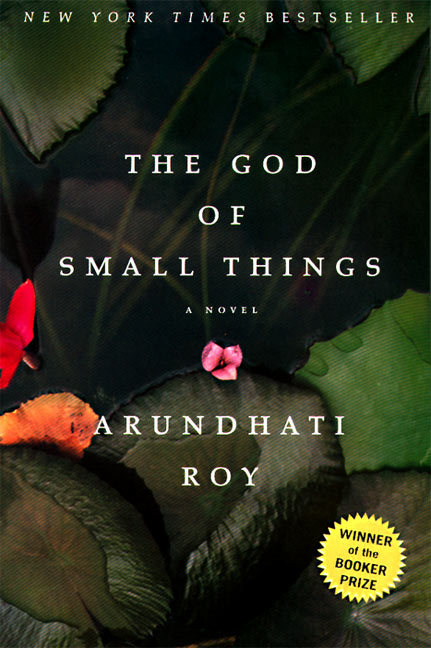
The God of Small Things
- Arundhati Roy


The God of Small Things is written by Indian activist Arundhati Roy. Roy, who won the 1998 Man Booker Prize for Fiction for this novel, is a strong critic of neo-imperialism and advocates for a number of environmental and anti-globalisation causes. The God of Small Things is listed on BBCs "The Big Read," a collection of 100 books that listeners of the BBC feel that everyone should read. According to Wikipedia, "It is a story about the childhood experiences of fraternal twins whose lives are destroyed by the "Love Laws" that lay down "who should be loved, and how."


Silas’ Choices:


The Darker Side of Western Modernity: Global Futures, Decolonial Options – Walter Mignolo


Greg and I came across this writer in Al Jazeera’s opinion pieces. He wrote a piece on non-western modes of thought, which was a very insightful piece on checking one’s ethnocentrism, privilege, and more specifically one’s epistemic (how you know what you know) context. As two white privileged Canadians compiling a series of books to read, what could be better than reading a book that looks into the future in non-western ways? The book itself critiques colonial logic, which has dominated the globe via modern project. That mono view of the world is fading as we have entered the 21st century, and this book examines some of the other ways of being and knowing that are challenging the western norm.


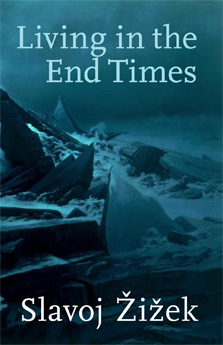
Living in The End Times - Slavoj Žižek


Leftist, Materialist, Atheist, Christian? Few people gain cultural prominence as philosophers, Žižek has
managed to do so. Yet it is not without controversy. Zizek has an almost cult like following, and on the other side people scoff when they say his name. This blog has linked, used, and alluded to some Žižek work with an occasional Youtube link. But there comes a time to move beyond Youtube; as such, it is time to read some of his work.

Living in the End Times is an examination of the global capitalist system. Žižek argues this system is nearing its nadir due to the ecological crisis, biogenetics, imbalances within the system, and social divisions (Amazon). As a cultural critic, he uses cultural references to make his point. The title can be read as an allusion to The End of History by Francis Fukuyama, who wrote about capitalism, democracy, and the nation state as the logical end of history that would eventually win out (1992). Twenty years later, I for one am a skeptic, and so is Slavoj.


The Weakness of God – John Caputo


For those who want to get their theology-nerd on! Caputo is a deconstructive philosopher influenced by Derrida, a Catholic, and pre-eminent scholar. How is that for a mix?! I have been looking forward to reading this for some time. I enjoy dabbling in pacifism, post-modernity, and theological liberalism. I anticipate these themes to collide within this work. In framing God as event, Caputo is able to re-conceptualize what/who/how of God. This may be a difficult read, but I figure that is why we are reading as a group!


THE CHALLENGE


Our goal: Two weeks per book. Finishing the first book by May 1st. This is an intense time-frame, we know that. For those quick at math you might be wondering, “Hey, six books, at two weeks per book, that only equals 3 months! Is summer not 4 months long?” And you would be correct in that calculation. But life happens! We might not make it through all our books in the time-frame we have set as our goal, which is why we give ourselves some wiggle room. If we do manage to keep to our time-frame, we may add two more books (there are plenty of books we had to cut for this reading list!) So if you are up to the challenge, start acquiring copies of these books, and get your read on!


Join Us For ONE Read


We also know that you are busy people, and you have reading lists of your own. So if you want to read just ONE of the books we have listed that would be GREAT. Join us and comment on the blog when we get to it! It will be super awesome.


The reading order:


The Kingdom Of God Is Within You - Leo Tolstoy
Post-Scarcity Anarchism - Murray Bookchin
Living in The End Times - Slavoj Žižek
The Darker Side of Western Modernity: Global Futures, Decolonial Options – Walter Mignolo
The God of Small Things - Arundhati Roy
The Weakness of God – John Caputo

Friday, March 29, 2013

Change Doesn't Just Happen Over-night...

Change doesn't just happen overnight, it happens both over-night and during the day. Change happens whenever people live it, not when we observe it.

The following is a piece I wrote for one of my classes this semester that attempts to capture this sentiment. It includes both a spoken word piece and a short explanation of the piece. Hope you enjoy!


Anyone who has been to an Occupy general assembly knows the true rate of change – slower than turtle slow. Yet, when one removes themselves from the frustration of this time consuming process, they are struck by the essence of the moment. In front of the individual is a group of people who are more than willing to suffer through the monotonous motions of consensus while actively participating in a demonstration of inspirational social change. Here, it is the moment that is of utmost importance, for it is in this moment that change occurs. A conversation is started that had been previously hushed, someone is made aware of an important issue, and individuals and groups are transformed into something new. Even if the process appears to be slow and arduous, change is happening and should not just be criticized (although it is important to be critical). Instead, it should be celebrated and affirmed.

I wrote this particular piece after a conversation with my roommate about the Idle No More movement. Specifically, we were discussing the perceived fractured and ambiguous nature of Idle No More. People are often quick to criticize the movement while denying it any credibility because members within the movement often disagree with each other. Furthermore, people complain that the movement’s goals are unclear and that their cause would be strengthened with a list of specific demands. Similar arguments have been made about other recent movements such as the Occupy movement. However, I believe that these movements represent a new kind of social movement. These movements are comprised of decentralized individuals who are committed to the idea of social change. Although these individuals may disagree with one another at times, they are all dedicated to seeing the end of oppression, domination, and suppression. These people refuse to wait for change to happen and instead live their lives with the idea that change is happening through them.

Poetry and spoken word are powerful tools for social movements and activism. Sarah Browning writes, “Poetry and other art forms can combat despair, inspire those working in the trenches of social change movements, humanize those we are taught to fear, and build bridges across our differences, telling our human stories” (see below for citation). In his lecture on poetry and activism given on January 22, 2013 to a SJS 200 class, Bud Hall talked about the seemingly magical moment when poetry is read aloud, allowing a transference of ideas from one to another in a way that often mystifies and astounds us. Poetry and spoken word go beyond communicating simple concepts, having the ability to communicate emotion and feeling. For example, Bud Hall read aloud a poem that addressed the criticism of Occupy’s lack of concrete demands. The poem itself listed many varying demands that were both personal to the author and universal to the movement. Instead of presenting a clear list of demands however, the poem was able to communicate the complexity of the movement while reasserting its credibility. I hope that my piece might serve a similar role for social movements such as Occupy and Idle No More. I hope to demonstrate these movements’ complexity and often-contradictory nature while reestablishing faith and hope in the change they bring.


Thursday, March 28, 2013

Paying Attention...


“The quality of life is in proportion, always, to the capacity for delight.  The capacity for delight is the gift of paying attention…More than anything else, attention is an act of connection.” – Julia Cameron

I was privileged recently to experience this connection through paying attention.  Due to some minor complications with my pregnancy, I have been off work already for almost three weeks.  I am now 31 weeks pregnant and experiencing all of the changes that entails – swollen feet, body aches, feeling ‘too big to be allowed’, and general discomfort.  Most of my time is spent at home so I was happy to join Duncan for a short trip to Granville Island recently.  He had a meeting so I set myself up at a coffee shop with a book (http://www.amazon.ca/The-Optimistic-Child-Depression-Resilience/dp/0618918094 for the book; for more on Dr. Seligman, check out: http://en.wikipedia.org/wiki/Martin_Seligman).
I was lucky enough to find a table to myself with three extra seats around it that were free so I could freely spread out my stuff and my girth...Being the weekend, the place was busy so I was not surprised when a white-haired woman and her husband asked if they could join me while they sipped their own coffees.  I smiled and said ‘sure’ and they joined me.  I went back to my book and they made awkward small talk – all of us seemingly uncertain how to incorporate each other into our current existence.  Once I got to the point of feeling too awkward in my own body, I put my book down in order to pick up my London Fog and surreptitiously ‘observe the surroundings’ before striking up a conversation with the lady sitting beside me.  In about 15 minutes, she had shared with me much of her story (originally from Northern Ontario, now living on the Sunshine Coast but comes down sometimes as her son has a place down here and is gone two weeks out of each month for work, etc) and we kept up with other chatter and comments (how we should visit the Sunshine Coast, etc, etc).  What I started to realize as I listened to this retired woman sharing her story was that I was really enjoying myself.  I was enjoying HER really, as she shared her story with me.  In paying attention to her, with my head out of my book, a smile on my face, I was connecting with a woman who I simply could have ignored and yet because I did not, I was able to delight in interacting with her. 
Soon, the couple had finished their coffees and decided to go check out more shops.  I remained seated but instead of going back to my book, I decided to keep my head up and take in my surroundings - to pay attention.   Minutes after the couple left, a woman who was sitting by us, observing the interaction I just had, came up to simply tell me that she thought I looked just beautiful, even, and especially since I probably did not feel like it right now.  Wow!  When does that ever happen??  (And how can I make it happen more often?).  She went back to her conversation at her own table and I remained at mine, now sporting a stupid, but delighted smile on my face.
Shortly after this, two older women asked if they could then join me at my table and I happily obliged.  They joined me and again we shared bits of our stories, connecting with each other rather than just our coffee cups.
All of this occurred within the 40-ish minutes that Duncan was in a meeting.  He then came and picked me up and we went home, however, the experience stayed with me and continued to keep a smile on my face for the rest of the day, as now I carried not just myself and baby along, but also pieces of these amazing women that I had met.
I’m interested to hear other stories that people have of what happens when they pay attention!

Wednesday, March 27, 2013

Martin Scorsese

I recently wrote a paper on Martin Scorsese's passion project The Last Temptation of Christ. In my research I had the welcome task of watching a bunch of his early movies that had not seen before including some of his short films from NYU. Below is Its not just you, Murray in two parts:


The film is a fascinating piece that foreshadows much of Scorsese's later work, in particular Goodfellas. However it is one line in particular that stood out to me as absolutely fascinating. At minute 6:17 in part one Joe says:

Murray, whenever anything ever happens to you... well you gotta learn to control yourself. You know always control yourself. Don't do anything. Don't say a word. You gotta stop, you gotta pull yourself together. You gotta take it easy. In other words murray when people bother you, hit you, abuse you, curse you, you know what i mean murray? When they really really bother you. Well Murray, don't do nothing. No sir, because remember that one day, murray, one day, you're gonna see somebody, some guy, who is all those other guys rolled into one and then you can give him all he deserves.

At this moment Murray punches a mirror reflecting his own face. This brilliant and fascinating juxtaposition of word and images, which echo Christ's passion, speaks challengingly to our tendency to place blame outside ourselves.

Scorsese is brilliant director, whose faith and Catholic upbringing are interwoven into almost all of his films. Despite often containing both graphic violent and sexual content, Scorsese's films are rarely  gratuitous but rather use explicit images for powerfully effective, realistic, thoughtful and challenging storytelling and communication of ideas. He is considered perhaps the greatest American director alive today and in my estimation this accolade is not unwarranted.

For the mature and thoughtful viewer I recommend: Mean Streets and Last Temptation
For the conservative but equally thoughtful viewer: Bringing out the Dead and Hugo