Showing posts with label Reviews. Show all posts

Thursday, August 1, 2013

Kanye West - Black Skinhead


                It has been a while since I posted about a new music video, but maybe that is because it is not every day that Kanye releases the video for “Black Skinhead.” Kanye, we love him, we hate him, we love to hate him. Whether I like what he is releasing at the moment or not, he is one of the artists that I follow, watching and listening to everything he puts out. At his best, Kanye is able to capture the cultural moment and return it to the audience with profound insight; I think of the lyrics in “Who Will Survive in America” and its critique of American capitalism and ideology. At his worst, Kanye is an egotistical womanizing maniac; “Monster” comes to mind as one of his more excessively graphic. However, the tension between these two aspects of Knaye’s work makes it all the more intriguing and uncertain of where he will go next.
                Kanye’s latest album Yeezus continues his political/personal/religious/ego-driven narrative of his work. A review of the album I read early on said it was probably his most self-absorbed album to date, more clearly mirroring 808’s and Heartbreaks than his early work or My Beautiful Dark Twisted Fantasy, and I would agree. Yeezus lacks some of the communal rage and dissent that is evident in his early albums, yet there is still the unsettling part of rap that is maintained. The part the disrupts the blasé life of the listener, or creates an intense affinity with those in similar situations. In Kanye’s ability to maintain the unsettling nature of rap, one can see the anger taking an existential turn as Kanye explores the angst within him. I think this turn is evident in “Black Skinhead.”
                I think the video for “Black Skinhead,” more clearly than the song itself, reveals the prayerful nature of the song. Kanye utilises Ku Klux Klan imagery, something that is not new in his work notably in “Jesus Walks” (white) and his video epic “Runaway” (red) after the eight-minute mark, representing racism and the cult of celebrity respectively. However, in “Black Skinhead” the imagery is turned onto himself (black). I think this turn is a realizing of the internal angst and uncertainty that gives rise to the violence. The drive to fight the racism and the conflicting draw-and-resistance to the cult of celebrity are depicted as causing a whelming up of internal angst that desires to explode.
                The video builds throughout, and I think it is intended to be an uncomfortable experience. The CGI humans, the dogs, and the frenetic splicing of the video disrupts and jars. It unveils an internal angst/anxiety/rage. In the build up of this rage, we become the one we hate, and then the video ends with what I think are explicit religious images. Imagery of the sacrifice of self, followed by an eleven-fold refrain of “God.” As such, it turns the rage into an angry lament, revealing the prayerful nature of the piece. This ending, for me, changed the song into one of Kanye’s masterpieces that captures, depicts, and comments on a stream of contemporary culture that eludes us, which he can help us understand.
                I hope you enjoy the video as much as I did.

Tuesday, June 11, 2013

Tolstoy – The Kingdom of God is Within You


Welcome to Summer Book Club 2013

Summary:
            Tolstoy develops an argument out of Matthew 5:39: “But I tell you, do not resist an evil person. If anyone slaps you on the right cheek, turn to them the other cheek also.” This is the premise, the argument, and the conclusion for Tolstoy – Christians are to be non-violent. Tolstoy then argues against a number of rebuttals levied against this assertion. He concedes that Church history largely does not point to a belief in non-resistance, but claims a minority always have believed it. Tolstoy then sets up Jesus as the moral Ideal that all humans are to strive towards and the infinite expansion of the sphere of love as the goal. This ideal will inevitably lead to dissonance between intent and actions - a constant inconsistency; which people try and resolve by changing their consciences rather than actions. This should lead to rebellion and revolution but we have enslaved ourselves to our own laws and have become oppressed by them. Military violence is then the authority that ensures this continued oppression. Therefore, Christianity as a new conception of life must inevitably be accepted; only this gift of a higher theory of life will emancipate humanity from misery. This emancipation destroys the state and is brought about by individual choice (from within), which will eventually reach a tipping point. Tolstoy concludes by  recounting some stories of how violence is perpetuated and how this individual choice is the means out of such violence.


Greg:
Impression:
           If there was one thing that was accomplished through my reading of Tolstoy's book, it was the discovery of two opposing forces within my own psyche. I found that - to his detriment - Tolstoy was writing to two very different audiences; those of Christian faith and those who are not of Christian faith (who he calls "men of science"). In my opinion, Tolstoy's argument could have been strengthened with sticking to the former audience. 
           I was pleased to hear his critiques of the institutionalized church and his identification of the hypocrisy of Christians who participate in systems of oppression. Although these are far from new critiques, they are ones that cannot be repeated enough. I believe that it is ludicrous for followers of a martyr for peace could themselves be involved with political, economic, and belief systems that rely on the institutionalization of violence, the systemization of oppression, and the embodiment of self-indulgence. If this is not ludicrous, it is at least disappointing to see apathy and lack of action to which Christians have subscribed themselves to. Tolstoy's often scathing critique of this hypocrisy pleased and invigorated the inner optimistic believer within myself.
           Tolstoy is also writing in order to bring the whole world into a Christian worldview which he believes will bring an end to human suffering. In fact, he is so optimistic in his argument that he believes that a global realization of "true Christianity" is inevitable and is already evident. I have a number of problems with this idea, two of which standout drastically. The first is that Tolstoy appears to deny his own fallibility while asserting that his conception of Christianity is universally true. However, Tolstoy is only a humyn who is writing from a very western point of view with what appears to be a limited conception of other belief systems that may claim - valid or otherwise - a similar claim to Truth. This leads me to my next point which is something that Silas touches on in his impression. That is, Tolstoy reduces his conception of Christianity to simply a moral code. Furthermore, I do not believe that this moral code is exclusive to Christianity. Perhaps it is the ex-missions student in me - the one who became fed-up with the neo-colonial attitudes of global evangelists - but Tolstoy's desire and expectation for a universal understanding of "true Christianity" sent the skeptical-Christian in me running. 

Importance:
           I was drawn to this book for two reasons; I have been increasingly captivated by the ideas of Christian Anarchists and because I had heard that this book was quite influential in the development of theories of non-violence. While reading, it became quite evident how influential Tolstoy was in both of those areas. His critiques of the institutionalized church, christians' participation in the state, and emphasis on the beatitudes are evident in the works and writings of figures such as early as Dorothy Day and as late as Shane Claiborne. Even the writings of the past couple of decades from more moderate (read "less-anarchist) and post-evangelist emergent authors  - those who call us away from the mega-churches and towards the intentional spiritual communities with their emphasis on social justice - echo the ideas of Tolstoy. The ideas of non participation in violence and using non-compliance as a tool for social change propagated by Gandhi, Martin Luther King, and other social activists of the 20th century are clearly evident in Tolstoy's writing. It is clear that the ideas contained within The Kingdom of God is Within You had and still have a far reaching impact in both our religious and political thinking today. 

Favourite Quotes:
           As I mentioned already, I really enjoyed Tolstoy's critiques of the institutionalized church. Here he (ironically) critiques the Church's claim to Truth:
"The follower of Christ, whose service means an ever-growing understanding of his teaching, and an ever-closer fulfilment of it, in progress toward perfection, cannot, just because he is a follower of Christ, claim for himself or any other that he understands Christ's teaching fully and fullfils it. Still less can he claim this for any body of men." P. 60
           Tolstoy goes on to show the ways in which the church enforces certain useless and silly rituals and practices in order to justify its existence and legitimate the profession and salaries of priests, monks, and other holy-persons. Here is his view on the rituals surrounding marriage. 
"If a man and woman want their physical union to be sanctified they must go to the church, put on metal crowns, drink certain potions, walk three times round a table to the sound of singing, and that then the physical union of a man and woman becomes sacred and altogether different from all other unions." P. 65
           Later, Tolstoy writes about the uselessness of international arbitration, treaties, and peace talks. He points out that although governments may show support for these endeavours, it is done insincerely. Governments are not at all interested in keeping the peace and when their sovereignty is threatened, all talks of peace are abandoned and replaced with actions of war.
"In the same way they pretend to support temperance societies, while they are living principally on the drunkenness of the people; and pretend to encourage education, when their whole strength is based on ignorance; and to support constitutional freedom, when their strength rests in the absence of freedom; end to be anxious for the improvement of the condition of the working classes, when their very existence depends on their oppression; and to support Christianity, when Christianity destroys all government." P. 130
           Finally, this quote is not actually from Tolstoy, but from his citation of Alexander Herzen. I found it particularly inspiring.
"If you are content with the old world, try to preserve it, it is very sick and cannot hold out much longer. But if you cannot bear to live in everlasting dissonance between your beliefs and your life, thinking one thing and doing another, get out of the mediavel white sepulchres  and face your fears. I know very well it is not easy."

Silas:
Impression:
            I had a difficult time entering into this book. It was not a page-turner and I had to force myself to keep reading. I think there were a few reasons for this: 1) The idea of non-resistance is not new to me. 2) I read it at the end of a semester and it was a little too similar to the material I had been reading for the past four months. 3) I picked up Game of Thrones again, finished book 4 and started book 5, so reading Tolstoy seemed liked work compared to easy fantasy reading. 4) The book starts a little bit slowly in my opinion and it does not really hit its stride until page 100 or 150.
            The book has left a bland taste in my metaphorical reading mouth. On the one hand, I appreciate what Tolstoy is attempting to do; on the other, I think he is uncritically reductionist in his Christianity. He ends up leveling Christianity to morality, that is primarily played out in politics and economics (these are elements I really appreciate, but he needs to say more). He ends up sounding like Kant, that religion is ethics, and all men need to do is follow the moral law (he takes a shot at Kant for this, but I feel like he ends up disturbingly close to Kant’s ethical commonwealth). I wish he had kept a little more wonder. I think this is evident as we are on the other side of the world wars and the spirit of optimism does not reign and we need a little more wonder to make pacifism and non-resistance tenable. So in addition to his Kantian moralism, he needs some Scleiermacher adding the sense and taste of the infinite into acts of non-resistance something to draw/lure/woo the actor into otherwise it is too bland a concoction no matter how exquisite his logical deconstruction of state and personal violence is in the second half of the book.

Importance:
            The most enjoyable part of reading this book for me was reading it in light of its historical context. I found myself continually reminding myself of when it was written and the context in which Tolstoy is situated. This is hard not to do as Tolstoy often cites political developments and recent history, current to his time. In this light, I think the true prophetic nature of this book can be appreciated. Writing pre-WWI the spirit of optimism that pervaded his context is evident. Tolstoy sometimes seems to partake in this spirit of optimism and sometimes criticizes it. It is a time heavily influenced by Hegel and the notion that the Nation State can do no wrong; in-fact, for Hegel, the State is what propels history forward. It is against this notion that Tolstoy’s work portrays and alternative path forward. He is eerily predicable at points as he foresees the militarization, posturing, and brinkmanship leading to the inevitable ends of war. War that eventually played itself out in WWI, the Bolshevik Revolution, and then again in WWI. Despite all of this, I found Tolstoy to be Ideologically elusive, which is probably to his credit (although it could also be interpreted as his position being slightly illogical). At points there are echoes of Marx, then of liberalism, then of biblical charity, as possible ways forward, yet at other points all of these are critiqued at one point or another (so I am left slightly confused as to what Tolstoy envisioned as the economic route forward – if you have it figured out please tell me in the comments below).

Favourite Quotes:
            I appreciated Tolstoy’s sarcasm against the objections against non-resistance that it is against the culture of the industrial age, “It is just as though drunkards when advised how they could be fought to habits of sobriety should answer that the advice is incompatible with their habit of taking alcohol.” P.41 I thought it captures that radical nature of non-resistance appropriately.
            I enjoyed when Tolstoy pit the Sermon on the Mount against the creed (though I think he misunderstands the creed) – “People who believe in a wicked and senseless God – who has cursed the human race and devoted his own Son to sacrifice, and a part of mankind to eternal torment – cannot believe in a God of love.” P.67
            Regarding the use of force, “In America there are fewer soldiers than in other states. That is why there is nowhere else so little oppression of the working classes, and no country where the end of the abuses of government and of government itself seems so near.” P.152 – A fascinating snapshot into Tolstoy’s historical moment.
            The self-defeating nature of violence, “Governments assert that armies are needed above all for external defense, but that is not true. They are needed principally against their own subjects, and every man, under universal military service, becomes an accomplice in all the acts of violence against the citizens without any choice of his own. P.156

Questions:
Did Tolstoy persuade you?
Were there new perspectives/arguments/ideas you had not encountered before?
Favourite quote?

Finally, if you did read the book PLEASE leave a comment (at least a small one) so we know that you were reading with us. We are curious as to who is reading which books.

Up Next: Post-Scarcity Anarchism – Murray Bookchin

Friday, April 26, 2013

JT and Sex

This seems to be the afternoon for music on the blog. This little post is about pop music and all that that entails….so you can’t say at the end I didn’t warn you.

Early today, in an attempt to get a reaction out of a friend (nameless because he knows who he is) who still doesn’t believe in the brilliance that is Justin Timberlake’s new album, The 20/20 Experience, I compared his albums to sex.

Let me preface, sex has been on my mind a lot lately. One of my final papers I am working on right now focuses on the Hebrew text of Song of Songs through an ecological lens. All that to say is I’m not thinking about anything else (in the least sexy way possible).

Anyways back to the music. I was so excited for JT’s new album, it was pre-ordered and when I woke up on Tuesday morning it was already downloaded onto my phone. I didn’t stop listening to it for about 72 hours. Getting ready in the morning, driving to and from work, during work and doing homework, I immersed myself in it. So to see that this dear person in my life just shrugged his shoulders in response made me sad. Of course it isn’t like FutureSex/LoveSounds, but don’t dismiss it because it’s different!

This morning I decided to listen to the two albums right after each other. Early on I had a revelation and sent him the following text message: 
“Ok. So I’m listening to JT’s FS/LS. Here’s what I think: the first album could be compared to having sex in an alley it’s hot, fast and dirty. Whereas the new album could be compared to sex in a relationship, it’s sometimes slow but beautiful because there’s depth.”
I think it is fair to say that our culture idealizes sex to the point that when it is normalized and perhaps even a little bit mundane we don’t know how to deal with it. We’re disappointed and feel betrayed. So after the heightened climax that was Justin Timberlake’s FutureSex/LoveSounds, of course one would be disillusioned to the beauty of an album that is based more on sustainable experiences and emotions (even the songs are longer!). If you are one of those who had too high of expectations and were initally disappointed by The 20/20 Experience, go back and have a listen and remember that the act of sex doesn’t always produce intimacy. 

Tuesday, April 9, 2013

Summer Book Club


This summer, we (Greg and Silas) want to invite you to read a bunch of books with us. We've each chosen three books for a total of 6 books. We'll be writing posts about the books when we finish each one and we want to invite you to take part in a conversation about these books.

Greg brings some political thinking, Silas is bringing some theology, and we are mixing and matching in a big stew of summer goodness. We wanted to put together a list that would be a good way of bringing together some religious, anarchic, economic, political, and decentralized thought. The list below has come together and it might just accomplish that lofty goal.

So without further ado, here are our book choices.  

Greg's Choices:


The Kingdom Of God Is Within You - Leo Tolstoy


"Once, on being asked by the Pharisees when the kingdom of God would come, Jesus replied, “The coming of the kingdom of God is not something that can be observed, 21 nor will people say, ‘Here it is,’ or ‘There it is,’ because the kingdom of God is in your midst.” - Luke 17:20-21

Most know Tolstoy for his literary masterpieces including War and Peace and Anna Karenina. However, there are many who also know Tolstoy as a theorist of Christian anarchism. The Kingdom of God is Within You is considered to be Tolstoy's primary text in articulating the Christian anarchist way of life. This book was apparently influential in helping develop Ghandi's theories of non-violent resistance. I'm choosing this book because Christian anarchism fascinates me.

Post-Scarcity Anarchism - Murray Bookchin


Bookchin is an interesting character with an ideological history that flirts with socialist, anarchist and sometimes libertarian thought. Post-Scarcity Anarchism is a collection of essays that are said to be the beginning of his theory of Social Ecology. In his own words, "Social ecology is based on the conviction that nearly all of our present ecological problems originate in deep-seated social problems. It follows, from this view, that these ecological problems cannot be understood, let alone solved, without a careful understanding of our existing society and the irrationalities that dominate it."


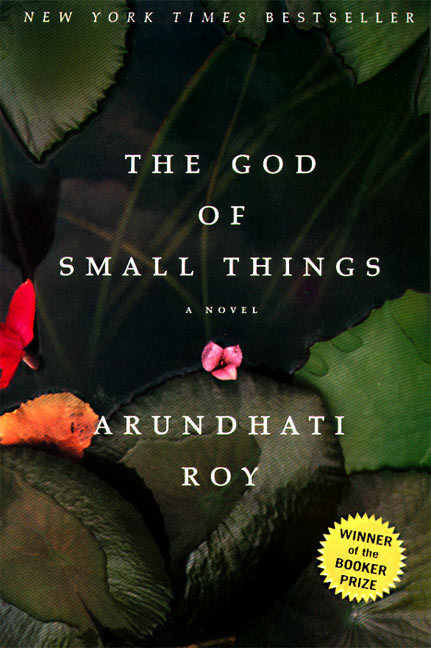
The God of Small Things
- Arundhati Roy


The God of Small Things is written by Indian activist Arundhati Roy. Roy, who won the 1998 Man Booker Prize for Fiction for this novel, is a strong critic of neo-imperialism and advocates for a number of environmental and anti-globalisation causes. The God of Small Things is listed on BBCs "The Big Read," a collection of 100 books that listeners of the BBC feel that everyone should read. According to Wikipedia, "It is a story about the childhood experiences of fraternal twins whose lives are destroyed by the "Love Laws" that lay down "who should be loved, and how."


Silas’ Choices:


The Darker Side of Western Modernity: Global Futures, Decolonial Options – Walter Mignolo


Greg and I came across this writer in Al Jazeera’s opinion pieces. He wrote a piece on non-western modes of thought, which was a very insightful piece on checking one’s ethnocentrism, privilege, and more specifically one’s epistemic (how you know what you know) context. As two white privileged Canadians compiling a series of books to read, what could be better than reading a book that looks into the future in non-western ways? The book itself critiques colonial logic, which has dominated the globe via modern project. That mono view of the world is fading as we have entered the 21st century, and this book examines some of the other ways of being and knowing that are challenging the western norm.


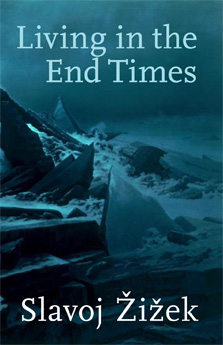
Living in The End Times - Slavoj Žižek


Leftist, Materialist, Atheist, Christian? Few people gain cultural prominence as philosophers, Žižek has
managed to do so. Yet it is not without controversy. Zizek has an almost cult like following, and on the other side people scoff when they say his name. This blog has linked, used, and alluded to some Žižek work with an occasional Youtube link. But there comes a time to move beyond Youtube; as such, it is time to read some of his work.

Living in the End Times is an examination of the global capitalist system. Žižek argues this system is nearing its nadir due to the ecological crisis, biogenetics, imbalances within the system, and social divisions (Amazon). As a cultural critic, he uses cultural references to make his point. The title can be read as an allusion to The End of History by Francis Fukuyama, who wrote about capitalism, democracy, and the nation state as the logical end of history that would eventually win out (1992). Twenty years later, I for one am a skeptic, and so is Slavoj.


The Weakness of God – John Caputo


For those who want to get their theology-nerd on! Caputo is a deconstructive philosopher influenced by Derrida, a Catholic, and pre-eminent scholar. How is that for a mix?! I have been looking forward to reading this for some time. I enjoy dabbling in pacifism, post-modernity, and theological liberalism. I anticipate these themes to collide within this work. In framing God as event, Caputo is able to re-conceptualize what/who/how of God. This may be a difficult read, but I figure that is why we are reading as a group!


THE CHALLENGE


Our goal: Two weeks per book. Finishing the first book by May 1st. This is an intense time-frame, we know that. For those quick at math you might be wondering, “Hey, six books, at two weeks per book, that only equals 3 months! Is summer not 4 months long?” And you would be correct in that calculation. But life happens! We might not make it through all our books in the time-frame we have set as our goal, which is why we give ourselves some wiggle room. If we do manage to keep to our time-frame, we may add two more books (there are plenty of books we had to cut for this reading list!) So if you are up to the challenge, start acquiring copies of these books, and get your read on!


Join Us For ONE Read


We also know that you are busy people, and you have reading lists of your own. So if you want to read just ONE of the books we have listed that would be GREAT. Join us and comment on the blog when we get to it! It will be super awesome.


The reading order:


The Kingdom Of God Is Within You - Leo Tolstoy
Post-Scarcity Anarchism - Murray Bookchin
Living in The End Times - Slavoj Žižek
The Darker Side of Western Modernity: Global Futures, Decolonial Options – Walter Mignolo
The God of Small Things - Arundhati Roy
The Weakness of God – John Caputo

Wednesday, March 27, 2013

Martin Scorsese

I recently wrote a paper on Martin Scorsese's passion project The Last Temptation of Christ. In my research I had the welcome task of watching a bunch of his early movies that had not seen before including some of his short films from NYU. Below is Its not just you, Murray in two parts:


The film is a fascinating piece that foreshadows much of Scorsese's later work, in particular Goodfellas. However it is one line in particular that stood out to me as absolutely fascinating. At minute 6:17 in part one Joe says:

Murray, whenever anything ever happens to you... well you gotta learn to control yourself. You know always control yourself. Don't do anything. Don't say a word. You gotta stop, you gotta pull yourself together. You gotta take it easy. In other words murray when people bother you, hit you, abuse you, curse you, you know what i mean murray? When they really really bother you. Well Murray, don't do nothing. No sir, because remember that one day, murray, one day, you're gonna see somebody, some guy, who is all those other guys rolled into one and then you can give him all he deserves.

At this moment Murray punches a mirror reflecting his own face. This brilliant and fascinating juxtaposition of word and images, which echo Christ's passion, speaks challengingly to our tendency to place blame outside ourselves.

Scorsese is brilliant director, whose faith and Catholic upbringing are interwoven into almost all of his films. Despite often containing both graphic violent and sexual content, Scorsese's films are rarely  gratuitous but rather use explicit images for powerfully effective, realistic, thoughtful and challenging storytelling and communication of ideas. He is considered perhaps the greatest American director alive today and in my estimation this accolade is not unwarranted.

For the mature and thoughtful viewer I recommend: Mean Streets and Last Temptation
For the conservative but equally thoughtful viewer: Bringing out the Dead and Hugo

Sunday, December 30, 2012

Fiona Apple's - The Idler Wheel

With the end of the year comes end of the year lists. I thought of making a top ten, but I'll start with one.Here is my most unexpected love of this year:

Fiona Apple's - The Idler Wheel Is Wiser Than the Driver of the Screw and Whipping Cords Will Serve You More Than Ropes Will Ever Do.

This album possibly had the longest most obnoxious title ever, but inside are depths of rhythems and lyrics I have pondered and will continue to ponder.

Unexpected love, possibly unwanted love. For me, this album was not an instant friend. I turned it off, barely made it through the first music video I watched from it, and was put off by its unique flavour. However, it kept showing up! A review here, a comment in a newspaper article there, a reference on some media source. These kept pushing me back into this album, and now I truly enjoy it each time I listen to it.

This may not be for everyone; but maybe, if you are "cultured" or as persistent as I was, you will come to love this album as well, even though it might qualify in some categories of "weird."


 I hope ya'll in internet lands are having a great winter season :)

Thursday, July 19, 2012

Blow your horn


What makes a great musician?  In my opinion, it is creativity – pushing the boundaries of the musical genre or even the instrument itself.  Oh, it also helps if they are Canadian.  Ok, so Colin Stetson was not born Canadian, but he is one on paper, having become a Canadian resident as a result of falling in love with a certain Sarah Neufeld (Vancouver-born violinist of Arcade Fire).  I can accept that – a Canadian in the name of love.
Stetson is a prodigy saxophonist and has found his success through playing with various artists such as Arcade Fire, Bon Iver, Feist, and has recently broken out as a solo artist in 2008 with his album entitled New History Warfare, Vol. 1 and a follow up in 2011 with New History Warfare, Vol 2: Judges.  Here is an example of Stetson’s solo work from his most recent album.  Some love it (myself included), others hate it. 
What say you?

Thursday, June 7, 2012

The Wire - "The game is the game"

I recently finished all 5 seasons of The Wire - a critically acclaimed HBO TV series that ran 2002-2007. I will add my voice to the celebration of this masterpiece of television. Television is most often produced as a religion. You are expected to attend weekly. They put on a show and life goes on. If your life is horrible or boring you can find excitement and escape in the lives of the characters of the TV show. This cycle is basically expected to continue forever. I personally think this happens to be awful. Religious fervour should be reserved for religion and even there one ought to be careful. We ought to expect better from TV, movies and art. The type of television I have described is basically soap opera although it is not reserved for actually soap opera. What it is not is good or meaningful storytelling...it is it endless, ultimately unfulfilling, character masturbation through arbitrary plot lines, perpetually postponing closure for the purpose of commercial revenue. There is minimal plan or meaning, merely the propagation of the powerful position of aired television.

The Wire is different. The wire is organized both within each season and the series as a whole, in order to share compelling, complex narratives, filled with engaging material, deep characters, and powerful social critique. It is one of the very, very few television shows I am aware of that truly ends, with an appropriate and powerful amount of closure. Its not that it ends with a neat little bow. Endings can be too neat and that can be equally repulsive as a non ending. But it truly ends.

Endings are like break ups. They can be difficult and painful. We need closure. Ideally we don't want to be angry. Hopefully, everyone is able to walk away as more of a human, filled with important memories. I, personally, can not claim to have experienced any great break ups. However, when The Wire broke off our brief and torrid affair (I watch the last three seasons in 3 days), I felt neither abandoned or relieved, but rather simultaneously sad and satisfied.

The theme that I found to be explored most pervasively was the price of power. This is explored both in Baltimore's drug trade, police department, politics and unions. The price of power in dollars, blood, integrity, relationships and justice... Everything has a cost. How much are you able/willing to pay? Is it worth it? Various answers to these questions are played out over and over creating a very thorough exploration of the theme. The game is the game. The game is power.

My final comment is that unlike many TV shows, that you might "try out," The Wire requires a season commitment. It took me until episode 6 or 7 to fully "buy in" to the show. And as one of the pickiest TV viewers I know it is with passionate conviction I can say that the possibly slow entry into the show is absolutely worth it. I expect you to commit to watching the first season. I am convinced that you will be thrilled to watch the rest without encouragement.

If you are looking for feel good, mindless, escapist TV... this is not it. Go watch Jersey Shore. If you believe in the value of great art, literature, stories and cinema and are able to handle mature content with a level of sophistication... then I recommend: The Wire.

***Note: This is an HBO TV series and contains profanity, violence and nudity.