Showing posts with label books. Show all posts

Tuesday, June 11, 2013

Tolstoy – The Kingdom of God is Within You


Welcome to Summer Book Club 2013

Summary:
            Tolstoy develops an argument out of Matthew 5:39: “But I tell you, do not resist an evil person. If anyone slaps you on the right cheek, turn to them the other cheek also.” This is the premise, the argument, and the conclusion for Tolstoy – Christians are to be non-violent. Tolstoy then argues against a number of rebuttals levied against this assertion. He concedes that Church history largely does not point to a belief in non-resistance, but claims a minority always have believed it. Tolstoy then sets up Jesus as the moral Ideal that all humans are to strive towards and the infinite expansion of the sphere of love as the goal. This ideal will inevitably lead to dissonance between intent and actions - a constant inconsistency; which people try and resolve by changing their consciences rather than actions. This should lead to rebellion and revolution but we have enslaved ourselves to our own laws and have become oppressed by them. Military violence is then the authority that ensures this continued oppression. Therefore, Christianity as a new conception of life must inevitably be accepted; only this gift of a higher theory of life will emancipate humanity from misery. This emancipation destroys the state and is brought about by individual choice (from within), which will eventually reach a tipping point. Tolstoy concludes by  recounting some stories of how violence is perpetuated and how this individual choice is the means out of such violence.


Greg:
Impression:
           If there was one thing that was accomplished through my reading of Tolstoy's book, it was the discovery of two opposing forces within my own psyche. I found that - to his detriment - Tolstoy was writing to two very different audiences; those of Christian faith and those who are not of Christian faith (who he calls "men of science"). In my opinion, Tolstoy's argument could have been strengthened with sticking to the former audience. 
           I was pleased to hear his critiques of the institutionalized church and his identification of the hypocrisy of Christians who participate in systems of oppression. Although these are far from new critiques, they are ones that cannot be repeated enough. I believe that it is ludicrous for followers of a martyr for peace could themselves be involved with political, economic, and belief systems that rely on the institutionalization of violence, the systemization of oppression, and the embodiment of self-indulgence. If this is not ludicrous, it is at least disappointing to see apathy and lack of action to which Christians have subscribed themselves to. Tolstoy's often scathing critique of this hypocrisy pleased and invigorated the inner optimistic believer within myself.
           Tolstoy is also writing in order to bring the whole world into a Christian worldview which he believes will bring an end to human suffering. In fact, he is so optimistic in his argument that he believes that a global realization of "true Christianity" is inevitable and is already evident. I have a number of problems with this idea, two of which standout drastically. The first is that Tolstoy appears to deny his own fallibility while asserting that his conception of Christianity is universally true. However, Tolstoy is only a humyn who is writing from a very western point of view with what appears to be a limited conception of other belief systems that may claim - valid or otherwise - a similar claim to Truth. This leads me to my next point which is something that Silas touches on in his impression. That is, Tolstoy reduces his conception of Christianity to simply a moral code. Furthermore, I do not believe that this moral code is exclusive to Christianity. Perhaps it is the ex-missions student in me - the one who became fed-up with the neo-colonial attitudes of global evangelists - but Tolstoy's desire and expectation for a universal understanding of "true Christianity" sent the skeptical-Christian in me running. 

Importance:
           I was drawn to this book for two reasons; I have been increasingly captivated by the ideas of Christian Anarchists and because I had heard that this book was quite influential in the development of theories of non-violence. While reading, it became quite evident how influential Tolstoy was in both of those areas. His critiques of the institutionalized church, christians' participation in the state, and emphasis on the beatitudes are evident in the works and writings of figures such as early as Dorothy Day and as late as Shane Claiborne. Even the writings of the past couple of decades from more moderate (read "less-anarchist) and post-evangelist emergent authors  - those who call us away from the mega-churches and towards the intentional spiritual communities with their emphasis on social justice - echo the ideas of Tolstoy. The ideas of non participation in violence and using non-compliance as a tool for social change propagated by Gandhi, Martin Luther King, and other social activists of the 20th century are clearly evident in Tolstoy's writing. It is clear that the ideas contained within The Kingdom of God is Within You had and still have a far reaching impact in both our religious and political thinking today. 

Favourite Quotes:
           As I mentioned already, I really enjoyed Tolstoy's critiques of the institutionalized church. Here he (ironically) critiques the Church's claim to Truth:
"The follower of Christ, whose service means an ever-growing understanding of his teaching, and an ever-closer fulfilment of it, in progress toward perfection, cannot, just because he is a follower of Christ, claim for himself or any other that he understands Christ's teaching fully and fullfils it. Still less can he claim this for any body of men." P. 60
           Tolstoy goes on to show the ways in which the church enforces certain useless and silly rituals and practices in order to justify its existence and legitimate the profession and salaries of priests, monks, and other holy-persons. Here is his view on the rituals surrounding marriage. 
"If a man and woman want their physical union to be sanctified they must go to the church, put on metal crowns, drink certain potions, walk three times round a table to the sound of singing, and that then the physical union of a man and woman becomes sacred and altogether different from all other unions." P. 65
           Later, Tolstoy writes about the uselessness of international arbitration, treaties, and peace talks. He points out that although governments may show support for these endeavours, it is done insincerely. Governments are not at all interested in keeping the peace and when their sovereignty is threatened, all talks of peace are abandoned and replaced with actions of war.
"In the same way they pretend to support temperance societies, while they are living principally on the drunkenness of the people; and pretend to encourage education, when their whole strength is based on ignorance; and to support constitutional freedom, when their strength rests in the absence of freedom; end to be anxious for the improvement of the condition of the working classes, when their very existence depends on their oppression; and to support Christianity, when Christianity destroys all government." P. 130
           Finally, this quote is not actually from Tolstoy, but from his citation of Alexander Herzen. I found it particularly inspiring.
"If you are content with the old world, try to preserve it, it is very sick and cannot hold out much longer. But if you cannot bear to live in everlasting dissonance between your beliefs and your life, thinking one thing and doing another, get out of the mediavel white sepulchres  and face your fears. I know very well it is not easy."

Silas:
Impression:
            I had a difficult time entering into this book. It was not a page-turner and I had to force myself to keep reading. I think there were a few reasons for this: 1) The idea of non-resistance is not new to me. 2) I read it at the end of a semester and it was a little too similar to the material I had been reading for the past four months. 3) I picked up Game of Thrones again, finished book 4 and started book 5, so reading Tolstoy seemed liked work compared to easy fantasy reading. 4) The book starts a little bit slowly in my opinion and it does not really hit its stride until page 100 or 150.
            The book has left a bland taste in my metaphorical reading mouth. On the one hand, I appreciate what Tolstoy is attempting to do; on the other, I think he is uncritically reductionist in his Christianity. He ends up leveling Christianity to morality, that is primarily played out in politics and economics (these are elements I really appreciate, but he needs to say more). He ends up sounding like Kant, that religion is ethics, and all men need to do is follow the moral law (he takes a shot at Kant for this, but I feel like he ends up disturbingly close to Kant’s ethical commonwealth). I wish he had kept a little more wonder. I think this is evident as we are on the other side of the world wars and the spirit of optimism does not reign and we need a little more wonder to make pacifism and non-resistance tenable. So in addition to his Kantian moralism, he needs some Scleiermacher adding the sense and taste of the infinite into acts of non-resistance something to draw/lure/woo the actor into otherwise it is too bland a concoction no matter how exquisite his logical deconstruction of state and personal violence is in the second half of the book.

Importance:
            The most enjoyable part of reading this book for me was reading it in light of its historical context. I found myself continually reminding myself of when it was written and the context in which Tolstoy is situated. This is hard not to do as Tolstoy often cites political developments and recent history, current to his time. In this light, I think the true prophetic nature of this book can be appreciated. Writing pre-WWI the spirit of optimism that pervaded his context is evident. Tolstoy sometimes seems to partake in this spirit of optimism and sometimes criticizes it. It is a time heavily influenced by Hegel and the notion that the Nation State can do no wrong; in-fact, for Hegel, the State is what propels history forward. It is against this notion that Tolstoy’s work portrays and alternative path forward. He is eerily predicable at points as he foresees the militarization, posturing, and brinkmanship leading to the inevitable ends of war. War that eventually played itself out in WWI, the Bolshevik Revolution, and then again in WWI. Despite all of this, I found Tolstoy to be Ideologically elusive, which is probably to his credit (although it could also be interpreted as his position being slightly illogical). At points there are echoes of Marx, then of liberalism, then of biblical charity, as possible ways forward, yet at other points all of these are critiqued at one point or another (so I am left slightly confused as to what Tolstoy envisioned as the economic route forward – if you have it figured out please tell me in the comments below).

Favourite Quotes:
            I appreciated Tolstoy’s sarcasm against the objections against non-resistance that it is against the culture of the industrial age, “It is just as though drunkards when advised how they could be fought to habits of sobriety should answer that the advice is incompatible with their habit of taking alcohol.” P.41 I thought it captures that radical nature of non-resistance appropriately.
            I enjoyed when Tolstoy pit the Sermon on the Mount against the creed (though I think he misunderstands the creed) – “People who believe in a wicked and senseless God – who has cursed the human race and devoted his own Son to sacrifice, and a part of mankind to eternal torment – cannot believe in a God of love.” P.67
            Regarding the use of force, “In America there are fewer soldiers than in other states. That is why there is nowhere else so little oppression of the working classes, and no country where the end of the abuses of government and of government itself seems so near.” P.152 – A fascinating snapshot into Tolstoy’s historical moment.
            The self-defeating nature of violence, “Governments assert that armies are needed above all for external defense, but that is not true. They are needed principally against their own subjects, and every man, under universal military service, becomes an accomplice in all the acts of violence against the citizens without any choice of his own. P.156

Questions:
Did Tolstoy persuade you?
Were there new perspectives/arguments/ideas you had not encountered before?
Favourite quote?

Finally, if you did read the book PLEASE leave a comment (at least a small one) so we know that you were reading with us. We are curious as to who is reading which books.

Up Next: Post-Scarcity Anarchism – Murray Bookchin

Tuesday, April 9, 2013

Summer Book Club


This summer, we (Greg and Silas) want to invite you to read a bunch of books with us. We've each chosen three books for a total of 6 books. We'll be writing posts about the books when we finish each one and we want to invite you to take part in a conversation about these books.

Greg brings some political thinking, Silas is bringing some theology, and we are mixing and matching in a big stew of summer goodness. We wanted to put together a list that would be a good way of bringing together some religious, anarchic, economic, political, and decentralized thought. The list below has come together and it might just accomplish that lofty goal.

So without further ado, here are our book choices.  

Greg's Choices:


The Kingdom Of God Is Within You - Leo Tolstoy


"Once, on being asked by the Pharisees when the kingdom of God would come, Jesus replied, “The coming of the kingdom of God is not something that can be observed, 21 nor will people say, ‘Here it is,’ or ‘There it is,’ because the kingdom of God is in your midst.” - Luke 17:20-21

Most know Tolstoy for his literary masterpieces including War and Peace and Anna Karenina. However, there are many who also know Tolstoy as a theorist of Christian anarchism. The Kingdom of God is Within You is considered to be Tolstoy's primary text in articulating the Christian anarchist way of life. This book was apparently influential in helping develop Ghandi's theories of non-violent resistance. I'm choosing this book because Christian anarchism fascinates me.

Post-Scarcity Anarchism - Murray Bookchin


Bookchin is an interesting character with an ideological history that flirts with socialist, anarchist and sometimes libertarian thought. Post-Scarcity Anarchism is a collection of essays that are said to be the beginning of his theory of Social Ecology. In his own words, "Social ecology is based on the conviction that nearly all of our present ecological problems originate in deep-seated social problems. It follows, from this view, that these ecological problems cannot be understood, let alone solved, without a careful understanding of our existing society and the irrationalities that dominate it."


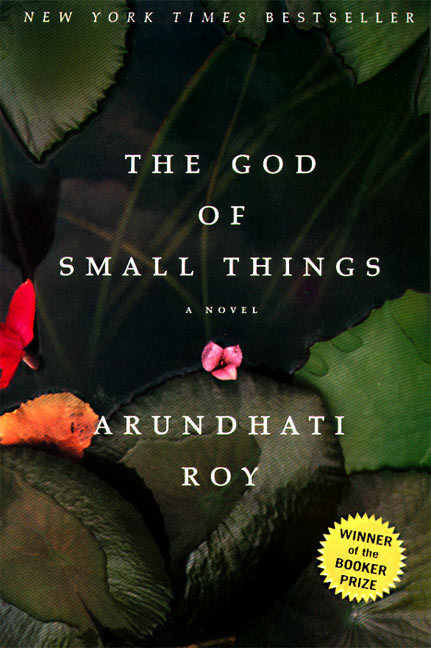
The God of Small Things
- Arundhati Roy


The God of Small Things is written by Indian activist Arundhati Roy. Roy, who won the 1998 Man Booker Prize for Fiction for this novel, is a strong critic of neo-imperialism and advocates for a number of environmental and anti-globalisation causes. The God of Small Things is listed on BBCs "The Big Read," a collection of 100 books that listeners of the BBC feel that everyone should read. According to Wikipedia, "It is a story about the childhood experiences of fraternal twins whose lives are destroyed by the "Love Laws" that lay down "who should be loved, and how."


Silas’ Choices:


The Darker Side of Western Modernity: Global Futures, Decolonial Options – Walter Mignolo


Greg and I came across this writer in Al Jazeera’s opinion pieces. He wrote a piece on non-western modes of thought, which was a very insightful piece on checking one’s ethnocentrism, privilege, and more specifically one’s epistemic (how you know what you know) context. As two white privileged Canadians compiling a series of books to read, what could be better than reading a book that looks into the future in non-western ways? The book itself critiques colonial logic, which has dominated the globe via modern project. That mono view of the world is fading as we have entered the 21st century, and this book examines some of the other ways of being and knowing that are challenging the western norm.


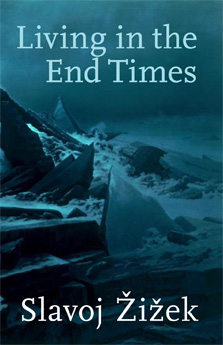
Living in The End Times - Slavoj Žižek


Leftist, Materialist, Atheist, Christian? Few people gain cultural prominence as philosophers, Žižek has
managed to do so. Yet it is not without controversy. Zizek has an almost cult like following, and on the other side people scoff when they say his name. This blog has linked, used, and alluded to some Žižek work with an occasional Youtube link. But there comes a time to move beyond Youtube; as such, it is time to read some of his work.

Living in the End Times is an examination of the global capitalist system. Žižek argues this system is nearing its nadir due to the ecological crisis, biogenetics, imbalances within the system, and social divisions (Amazon). As a cultural critic, he uses cultural references to make his point. The title can be read as an allusion to The End of History by Francis Fukuyama, who wrote about capitalism, democracy, and the nation state as the logical end of history that would eventually win out (1992). Twenty years later, I for one am a skeptic, and so is Slavoj.


The Weakness of God – John Caputo


For those who want to get their theology-nerd on! Caputo is a deconstructive philosopher influenced by Derrida, a Catholic, and pre-eminent scholar. How is that for a mix?! I have been looking forward to reading this for some time. I enjoy dabbling in pacifism, post-modernity, and theological liberalism. I anticipate these themes to collide within this work. In framing God as event, Caputo is able to re-conceptualize what/who/how of God. This may be a difficult read, but I figure that is why we are reading as a group!


THE CHALLENGE


Our goal: Two weeks per book. Finishing the first book by May 1st. This is an intense time-frame, we know that. For those quick at math you might be wondering, “Hey, six books, at two weeks per book, that only equals 3 months! Is summer not 4 months long?” And you would be correct in that calculation. But life happens! We might not make it through all our books in the time-frame we have set as our goal, which is why we give ourselves some wiggle room. If we do manage to keep to our time-frame, we may add two more books (there are plenty of books we had to cut for this reading list!) So if you are up to the challenge, start acquiring copies of these books, and get your read on!


Join Us For ONE Read


We also know that you are busy people, and you have reading lists of your own. So if you want to read just ONE of the books we have listed that would be GREAT. Join us and comment on the blog when we get to it! It will be super awesome.


The reading order:


The Kingdom Of God Is Within You - Leo Tolstoy
Post-Scarcity Anarchism - Murray Bookchin
Living in The End Times - Slavoj Žižek
The Darker Side of Western Modernity: Global Futures, Decolonial Options – Walter Mignolo
The God of Small Things - Arundhati Roy
The Weakness of God – John Caputo

Monday, May 28, 2012

Harry Potter Pilgrimage

Summer is a time to hang out with friends; for me this involves hanging out with Harry Potter. This is quickly becoming my summer-time tradition. Year after year, as the sun comes out and the earth warms, I pull out my books, dust off the covers, and begin a few thousand page journey.

This year I am trying to make the journey last. I am trying to read a book I have not read before in between each book of the Harry Potter series. So far it is going well.

Yesterday, I finished "Harry Potter and the Chamber of Secrets". Today, I finished "Dead Aid" by Dambisa Moyo (an interesting alternative take on aid and development, but unfortunately still built on the fundamental belief that growth is good and infinite). Which means, I get to start "Harry Potter and the Prisoner of Azkaban" tonight!

Dumbledore continues to blow my mind, and is undoubtedly my favorite character. Here is a short extract to brighten your day:

"It [the sorting hat] only put me in Gryffindor,' said Harry in a defeated voice, 'because I asked not to go in Slytherin...'
'Exactly,' said Dumbledore, beaming once more. 'Which makes you very different from Tom Riddle. It is our choices, Harry, that show what we truly are, far more than our abilities.' Harry sat motionless in his chair, stunned."

Sunday, May 13, 2012

How (Not) To Speak Of God


This is the latest in a string of Peter Rollins books that I have read. I began three months ago with “The Orthodox Heretic”, then last month I read his new book “Insurrection”, and presently I have just finished his first book “How (Not) To Speak Of God”.

Peter writes postmodern/emergent theology, or as he would call it a/theology. I have been thoroughly enjoying his creativity that leads to his conclusions, specifically the use of theology and philosophy in parallel to arrive at similar conclusions yet respecting their differences. Alongside this, there is creative story telling and logical anti-logic. He sharply critiques modern thought with thorough deconstruction, constantly drawing on the greats of Freud, Nietzsche, and Marx.

“How (Not) To Speak Of God” will be the reason Rollins will continue to have a voice in the emergent conversation. I have not read a book like it before. It was unapologetically idealistic. It was refreshing to leave behind pragmatic arguments and semantics and to chart a radical new course. Though I liked the first two books I read, this book had me on the edge of my seat (probably to the annoyance of my roommates who experienced the book through my retelling). The book is deeply rooted in the apophatic Christian tradition in an attempt to move beyond belief to a new understanding of belief.


Here are some of my favourite segments/quotes:

“We were hungry and you gave us nothing to eat…Silence descended upon all of creation as the people pronounced their judgement on God.”

“For now, al we can comfort ourselves with is the possibility that the God we accuse is a God of our own creation. It is for this reason that Slavoj Zizek claims that the God we think we can understand is like a Tamagochi toy – our own creation which subsequently makes demands upon us.”

“Not only is Christianity atheistic insomuch as it rejects ideas of God which stand opposed to those found in its own tradition (the early Christians were called atheists because of their rejection of those deities worshiped by the Romans), but also there is a sense in which Christianity is atheistic because it rejects its own understanding of God.”

Context: acts of love - trying to understand how to truly give a gift.
“Here we are presented with three criteria for the perfect, loving gift – that is, one that we would not use in order to get a reward: (1) ther receiver does not know that he or she has been given a gift; (2) nothing is actually given; and (3) the giver does not know he or she has given anything.”

Reading from left to right. Orthodoxy = right belief. Orthopraxis =  right practice. No read it right to left. Orthodoxy = believing in the right way. Orthopraxis = practicing in the right way. “This means that the question, “what do you believe?” must also be accompanied by the question “How do you believe”.”

“speaking of God is never speaking of God but only ever speaking about our understanding of God”

“the Christian God destroys the idea of immanence and transcendence as opposite points in a diffuse spectrum, replacing this with the idea that immanence and transcendence are one and the same point.”

If that has sparked your interest, go read the book. I do not think it will disappoint.

Tuesday, March 20, 2012

Jesuits in Space...

Just read a book called "The Sparrow" by Mary Doria Russell and it blew my mind! I am still in recovery. Jesuits in Space... I don't even know what to say because I don't want to give anything away. This is such an amazing look at faith and doubt, cross cultural communication and life, reverse culture shock, post traumatic stress disorder, community, Catholicism, globalization, technology, science...

When life on another planet is discovered... the first to go are Catholic missionaries... not so much to make converts but to bear witness and to meet God's other children...to know them and love them - ad majorem Dei gloriam: for the greater glory of God. It was, of course, as is so often the case, a heartbreaking disaster...

The pages expose us to the horrifyingly difficult questions and challenges of cross cultural engagement with beautiful tenderness. A must read!

I begin the sequel immediately.

Wednesday, February 22, 2012

Stories. Pt. 2. The Fire Chicken.

The Fire Chicken resides above the entrance to my kitchen. The Fire Chicken arrived sometime in 2009. The chicken was drawn by a friend and was pinned to our wall with great pride, and minimal ceremony. Had I know the staying power of The Fire Chicken, I would have celebrated its arrival with trumpets and cymbals.

Like all stories, it changed with time. It shifted from a fun drawing, to a picture with history and some form of meaning. The shift was based on jokes about the position of prominence it holds, where other home might place a crucifix, we have The Fire Chicken. It now lays claim to being “The Deity of the House” (Please do not take this too seriously – It is a Fire Chicken).

Today, The Fire Chicken was dethroned. I took The Fire Chicken off the wall to scan it. I know all my previous roommates felt a shutter in the force, as The Fire Chicken moved for the first time in years. Do not be too alarmed, The Fire Chicken has been returned to it proper place.

As I ponder The Fire Chicken, I think off the number of people who have lived under its “Diety” or those who have visited its shrine (my home). I count at least ten people who have lived here, and countless people have asked us about The Fire Chicken. Its story continues to propagate and the influence of its story spreads far wider than its local impact. Roommates move on, friends change, and stories spread; such is the nature of life and stories.

What prompted this post? The Fire Chicken now has a new story to tell. It was my birthday earlier this month, and my roommate Sam commissioned his younger sister, Laurel, in New York, to write a story about The Fire Chicken. He gave her the title, she created, and I received. The story is excellent! It now hangs on the wall near my desk. It took me two or three readings to fully appreciate the story. So without further ado:


In my previous post about stories
, I began to argue that we all live interrupted stories. I think “the Story of a fire Chicken that went Skiing” can help us understand this. The postmodern genius of this story arrives in the third frame. It is here we have a choice, either dismiss everything because a new story breaks in, or accept the interruption and move on with a syncretised understanding. We cannot ignore that we see bunnies and not a fire Chicken in the third frame. Thus, we must conclude that in this story world either a fire Chicken can shape shift, or the story world contains more animals and more spectacular creativity that one originally anticipated. The interruption spurs us on to better understandings, more creative understandings, and more holistic understandings.

There is, however, another option. One may conclude that “the Story of a fire Chicken that went Skiing” is the only story. One may refuse to accept that there has been an interruption in panel three. One may deem panel three “wrong”. I, however, cannot make such claims. I respect the creativity of the author. I acknowledge the limited scope of my understanding of the story. I look to the interruptions for a greater understanding of the story. The story reflects on me, showing my own limitations, while simultaneously showing others (specifically the author) do not have the same limitations. Consequently, I find panel three not to be “wrong”, but to be the best panel in the story because of the immense discovery that goes along with it. The discovery that leads to a great ending. An ending directed at home. Home!

So now. I want to make it abundantly clear. As much as I was talking about “the Story of a fire Chicken that went Skiing” I was also NOT talking about “the Story of a fire Chicken that went Skiing”. Levels, so many levels ;) Stories are great at levels.

Sunday, September 18, 2011

Coming out Normal...(if that is possible)

As the new school year begins I am experiencing a sense of loss. I miss it. I miss the mental stimulation, I miss making my own schedule, I miss meeting a few new people, and I even miss working late into the night on a paper. BUT I do not miss the crazies.

I have not moved locations, and as a result I am still surrounded by those who are attached to the academic institution. As these people start the school year the stories begin to drift in, stories from every corner. Stories of boys and girls in love, stories of ridiculous questions, stories of ignorance and bigotry, and stories of great conversations and insights. It is a mixed bag, a mixed bag of the good, the bad, and the crazies.

The crazies are everywhere, but they seem to flock to Bible Colleges. Maybe it is their need for community, maybe Bible Colleges are really a collection of outcasts and socially inept people. I will go out on an offensive limb that there are more crazies at Bible College than elsewhere.

Let me explain Bible College crazies before I go on. To make vast generalizations, which are not ideal but necessary because I do not wish to point out specific people, crazies may be defined by having a narrow perspective. We all like to think our own unique view is correct, this is just human, but what sets a crazy apart is that he or she lacks an intellectual humility to acknowledge he or she may be wrong. They pigeon hole God and life into neat boxes, which they are unable to see are boxes. These people may even be proponents of the cliche "Do not put God into a Box", but when challenged on their box they refuse to acknowledge it is a box.

Some common crazy boxes at Bible College are: My life is all predetermined and I am just along for the ride. God is logical, as we understand logic, therefore the logic of Reformed TULIP is inerrant. Proper education is the factory making of good evangelicals who know a lot of information, rather than learning how to think. Life is hyper-spiritualized, therefore everything has other meanings which involve the learning of christianeese in order to be understood, resulting in no one understanding what is being talked about. Terms of liberal and conservative, as used in the contemporary media, equate to "christian" and "non-Christian", rather than perceiving Christian as being unable to fit into either box of liberal and conservative.

The barrage of stories coming out of the Bible College of students and professors being caught up in one or many little boxes has caused me to reflect. I reflect with my friends and my community, which I know is totally bias because for the most part I like them and we often agree more than disagree. yet, as of late there has been a theme of how we were able to come out "normal". Normal being 51% so not very precise, but normal in that we are able to converse about various topics, relate to various points of view, and have diverse interests in art, culture, science, sport, etc.

In a conversation with a friend about how we turned out so "normal", we concluded it largely was how we grew up. We were fortunate to go to a church that did not hyper-spiritualize everything, so we grew up with sermons that related to life, biology, science, environmentalism, politics, depression, and culture. These were all tied to scripture and preached from the pulpit. We also grew up in a community where the parents held differing opinions and conversation always was filtered through respect for the relationship while still holding one's opinion. Beyond all of these, I attribute our "normalness" to the fact that I grew up in a community that read.

One specific memory I have that displays this is memories of mornings when camping. The community I grew up in went camping together and on Saturday and Sunday mornings when people arose and gathered around fires, it was a common sight for a newspaper to appear from here and then another from there. Newspapers that had been stashed along for multiple purposes, first to be read, and second to provide the children with fire starting material. The memories I have of these times have follow up memories, memories of all the parents discussing politics, different perspectives and the news of the week.

One might say, but probably would not, "my parents read too, and I did not come out normal". The difference I might propose in response is "what was the breadth of the reading one experienced". The parents in my community read widely, although committed Christians, it was not unheard-of to listen in on a discussion of theology that included works by Marcus Borg, or relevant points of Buddhist thought, or the similarities in Hinduism and the development of India. The newspapers that were read around the fire were not all the same, some conservative, some liberal, and the discussion of the news would include thoughts and critique of bias. This later would become common practice; learning to distinguish a writers bias and take that into consideration when reading what he or she wrote. Histories were also read, from the ancient near east, to asian, to Europe, and even Mayan and Aztec cultures were understood. "Normalness" came from having to defend one's opinion against any critique no matter how diverse the reference point. This prohibited brainwashed answers and isolated perspectives. Defence of one's ideas may include biblical reference but also needed to be logical given other evidence. It was in the necessity to have this other evidence that promoted me and my peers to understand the world as wide and vast, an incomprehensible treasure trove of ideas and perspectives. Perspectives that shaped one into "normal".

Earlier this summer a friend asked me for a book list, I was busy and failed to get back to her. This, however, seems like the appropriate time and place for a list. The following are either books I have read, books my parents and their friends read which fit in line with this post, or books that are on my bookshelf waiting to be read. The highlights that ought to be read include:

Out of Babylon - Walter Brueggemann
A History of God: The 4000-Year Quest of Judaism, Christianity and Islam - Karen Armstrong
Failed States - Noam Chomsky (or anything else by Noam)
Infidel - Ayaan Hirsi Ali
Che: A Memoir by Fidel Castro
The Divine Comedy - Dante
Lord of the Rings - J.R.R. Tolkien
The Chronicles of Narnia - C.S. Lewis
Harry Potter - J.K. Rowling
Midnight's Children - Salman Rushdie
Colossians Remixed - Walsh & Keesmaat
An Imperfect Offering - James Orbinski
The Shadow of Kilimanjaro - Rick Ridgeway
Reading the Bible Again for the First Time - Marcus Borg
The Gospel in a Pluralist Society
Fugitive Pieces - Anne Michaels
Anarchy and Christianity - Jacques Ellul
I, Claudius - Robert Graves
Guns, Germ, and Steel - Jared Diamonds
A Short History of Nearly Everything - Bill Bryson
The Orthodox Heretic - Pater Rollins

If you have read a book that you think should be added to that list, put it in the comments section below. I am always looking for more books to read, or dream about having the time to read.

Monday, September 5, 2011

Infidel – By Ayaan Hirsi Ali - A MUST READ

August was a busy month; as a result, I did less reading during that month than any time in the past number of years. I miss reading. The sad thing was it had nothing to do with a lack of interest in what I was reading. I was working through two books, both of which provided much to think about and were challenging in their own ways. I still have not completed A History of God by Karen Armstrong, but its challenges are intellectual as it is a thick read requiring lots of mental energy. She takes and critical look at the development of people’s perception of God via the three monotheistic faiths, Judaism, Christianity, and Islam. The other book I was reading, and have just finished, is Infidel by Ayaan Hirsi Ali. It is her autobiography of her exit from Islam, her secularization, growth in belief of individual human rights, and increasing activism to free women from the mental cages of dogmatic Islam. Ayaan’s and Karen’s perspectives on Islam are completely different and this has made the simultaneous reading of these books all the more interesting and difficult.

I could go on about both books, but I really wanted to encourage everyone reading this blog to pick up a copy of Infidel and read it. Here is why…

The book is incredibly relevant to critical Christian thought. Ayaan writes about Islam, and briefly compares it to Christianity, but the general statements made about Islam can be directly transferred to some types of Christianity. Doing this, the reader will be confronted by some major discussions that need to happen within the church, as well as some that are happening and need to continue. Such as:

The function of religion within a secularized state. Dogmatisms, anti-intellectualism, and obedience driven religion, she argues, are incompatible with an enlightened worldview and democratic systems, based on the rights of the individual. This discussion then needs to be developed in Christian circles to incorporate our beliefs about individual rights and how they function within community and communal rights.

The place of government funding in religious education. I went to a Christian school and Bible College, both of which were somewhat funded by the government and I was always happy to accept the money. However, reading this book has me questioning that system, as the same policies that fund my schooling also fund religious educations that oppress women, promote bigotry and teach prejudice. Now I am uncomfortable with that knowledge.

Ayaan also challenges my leftist leaning political stance. Her critique of tolerance and multiculturalism is given significant weight as she speaks from a platform of a woman from a visible minority.

The topics of spiritual abuse, honour/shame culture, tribal systems, development, and political instability are also prevalent throughout the book. All of which ought to be given an entire blog post. However, for the sake of succinctness I will not follow those rabbit trails. The jist of what I am saying is that I have not been so challenged in my worldview by any other book in recent memory. I will be pondering this one for a long time to come, so I encourage you to pick it up, read, and be challenged in your perceptions of how civil society ought to function, the role of religion, and the dilemma of tolerance versus individual rights versus communal rights.